


August 10, 2026
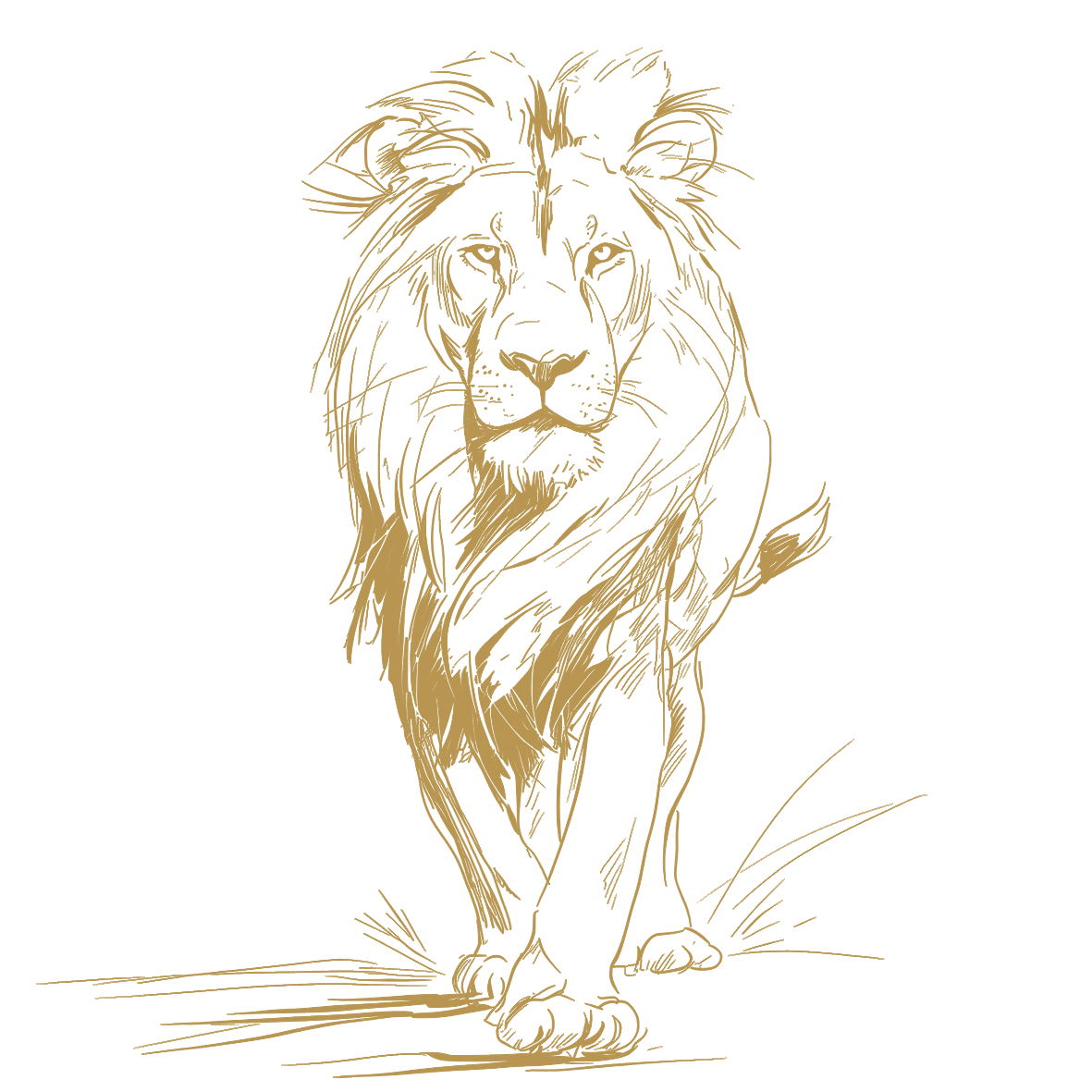
Lion sightings at Onguma have become a defining part of a stay, and it is no accident. Bordering Etosha National Park along its eastern edge, Onguma sits along a natural corridor for wildlife, and lion move freely between the private reserve and the park, drawn by the same water, prey, and open ground that has always shaped this landscape. It is this closeness to Etosha that makes an Onguma lion encounter so rewarding, though as with any wild place, no sighting is ever guaranteed.
A new partnership with the Namibian Lion Trust, made possible by the conservation levy included in your stay, is extending our commitment to lion conservation well beyond our own fence line and into the heart of Namibia’s Kunene Region, home to the country’s desert-adapted lions.
Since 1997, the Namibian Lion Trust has worked alongside communal conservancies in Kunene to ease the long-standing conflict between farmers and lions. Predator-proof bomas have been built in known hotspot areas, farmers are trained in arid-adapted livestock management, and youth and women are brought into conservation education. Fewer livestock losses generally mean greater tolerance for the large carnivores that share this land, and that tolerance is the quiet, patient work of decades.
At the heart of this effort is the Lion Ranger Programme, endorsed by the Ministry of Environment, Forestry and Tourism in 2020. Forty six Lion Rangers, drawn from eleven Lion-Range Conservancies, patrol close to 40,000 square kilometres of some of the most remote country in Namibia. Many are farmers themselves, balancing their own livestock losses against a genuine passion for the lions they protect.
For all their dedication, the Lion Rangers have faced one persistent obstacle: communication. Across such vast and often inhospitable terrain, a weak or non-existent network can mean the difference between a rapid response to a conflict call and a lion lost to retaliation.
Onguma Safari Camps has put its support behind a pilot project to change this. One farmer, one Rapid Response Unit leader, and two Lion Rangers are being equipped with Garmin inReach satellite communication devices, allowing real-time reporting on lion location and movement, and just as importantly, a way for Rapid Response teams to reach farmers facing conflict before it turns fatal for livestock or lion. It is a direct line of support from a reserve where guests come to watch lion, to the rangers working to make sure lion have a future to be watched at all.
The Namibian Lion Trust team recently joined Rapid Response leader Jackson Kavetu on patrol along the western border of the Hobatere Concession, an extension of Etosha National Park and a protected breeding zone for lion and other wildlife. The team was searching for a lioness who had lost her collar, along with three young lions that had moved onto neighbouring farmland during the dry season, when foraging pressure pushes wildlife through the boundary fence in search of new ground.
Jackson is the first to carry a Garmin inReach Messenger, giving the Trust the ability to track his movements and receive updates directly from the field. Training for the remaining Lion Rangers and the selected farmer will continue once patrols return from a month in the field, with the wider programme set to commence in July 2026.
By choosing to stay at one of our camps, you are directly supporting lion conservation, not only for the lion you may see from your vehicle at dusk, but for the farmers and rangers of the Kunene Region, hundreds of kilometres from our gates, where the same species is fighting for space in a much harder landscape. Two lion populations, one shared future, and a levy that now works for both.
Plan your safari with Onguma and discover a reserve where every stay supports lion conservation, both on our land and across Namibia.
July 30, 2026
When guests arrive at Onguma Nature Reserve, a private conservation reserve bordering Etosha National Park in Namibia, they come for extraordinary wildlife encounters, spectacular landscapes, and the chance to experience one of Namibia’s most remarkable wilderness areas. What many do not immediately see, however, is the extensive conservation work taking place behind the scenes every day.
Covering 35,970 hectares of protected wilderness, with its western boundary merging seamlessly with Etosha National Park, Onguma is far more than a safari destination. Home to four of the Big Five, an abundance of plains game, and more than 300 bird species, the reserve serves as a vital conservation landscape where wildlife protection, habitat management, scientific monitoring, anti-poaching operations, and responsible tourism work together to safeguard biodiversity for future generations.
Conservation at Onguma is not treated as a separate project; it is woven into every aspect of reserve management. Revenue generated through tourism directly supports wildlife protection initiatives, habitat management, research programmes, community development projects, and the reserve’s dedicated Anti-Poaching Unit (APU).
Every guest contributes through Onguma’s Conservation Levy, helping to fund wildlife monitoring, veterinary interventions, species relocations, habitat restoration, and ongoing conservation research.
Across Africa, wildlife conservation faces significant challenges, including habitat loss, human-wildlife conflict, climate change, and poaching. In response private conservation reserves that form part of the greater Etosha ecosystem, such as Onguma, play a vital role in protecting biodiversity, conserving critical habitat, and supporting the long-term coexistence of wildlife and local communities.


Onguma’s conservation success extends beyond its wildlife and into the surrounding communities.
Employment, skills development, and economic opportunities all contribute to creating a sustainable conservation model. By providing stable employment and competitive wages, the reserve helps support families while fostering a sense of shared responsibility for protecting the landscape.
As Pieter van den Berg, Onguma Reserve Manager, explains:
“Just paying a decent salary makes a big difference and has an impact on the community. There’s money to feed their children, build a house, and send their kids to school. At the same time, they want to protect this place because they know it is feeding their families. It becomes another way of combating crime and improving safety.”
The reserve’s commitment extends beyond employment. Through projects such as Oshivelo Farming, fresh produce is supplied to both the reserve and surrounding communities, creating additional economic opportunities while improving access to affordable food.
It is a model that recognises that successful conservation depends as much on people as it does on wildlife.
Effective wildlife conservation in Namibia depends on understanding the ecosystems being protected.
Onguma invests heavily in wildlife monitoring, annual game counts, habitat assessments, veterinary interventions, and scientific research designed to support evidence-based conservation management.
Much of this work takes place away from the guest experience. Camera traps positioned at 22 of the waterholes provide valuable data on wildlife movements and behaviour without disrupting natural patterns. Daily patrols, rhino tracking, fence inspections, and ongoing ecological monitoring help reserve managers make informed decisions about wildlife populations and habitat health.
The reserve also supports important research projects, including studies focused on vultures, one of Africa’s most misunderstood yet ecologically important species.
Field scientist in Namibia at Leibniz-IZW and conservation researcher Rubén Portas explains: “Vultures are very important animals in the ecosystem. If you want to study what dies, why it dies, and where it dies, the key is really to look at the vultures.”
By fitting vultures with lightweight tracking devices, researchers gain insight into events occurring across vast landscapes.
They become free sentinels, providing valuable information about the health of the ecosystem.”
The findings, published in the Journal of Applied Ecology in 2024, are helping conservationists better understand ecosystem health across Namibia and the wider region. The information gathered not only supports management decisions at Onguma but also contributes to broader conservation efforts across southern Africa.
“Our tagged vultures can fly up to 200 kilometres in a day,” says Portas. “
Protecting wildlife and managing a reserve the size of Onguma requires significant resources. Anti-poaching patrols, specialist training and equipment, wildlife monitoring, veterinary care, habitat restoration, scientific research, water infrastructure, and reserve maintenance all form part of the daily work required to safeguard the reserve’s biodiversity.
Tourism plays a vital role in making these conservation efforts possible. Through Onguma’s Conservation Levy, every guest contributes directly to the protection of wildlife and the long-term sustainability of the reserve. The levy helps fund practical conservation initiatives, from rhino monitoring and anti-poaching operations to ecological research, habitat management, and veterinary interventions.
Responsible tourism at Onguma extends beyond financial support. Game drives operate under strict environmental guidelines, including a no off-road driving policy designed to minimise disturbance to wildlife and sensitive habitats. Wildlife sightings occur entirely on the animals’ terms, ensuring that conservation priorities remain at the forefront of the guest experience.
For many guests, this approach offers an opportunity to become active participants in conservation rather than simply observers. While a safari may last only a few days, its impact extends far beyond the duration of a stay.
As Onguma Guide Liberty explains: “Part of what you have invested to be with us here on the reserve goes towards the APU – the Anti-Poaching Unit. This is very important. Your stay here is not just about beautiful accommodation and great meals; you are making a difference while being on holiday.”
Through this model, every visit helps protect Namibia’s wildlife while supporting the conservation work that ensures future generations can continue to experience the landscapes and species that make Onguma so special.
For Onguma’s guides, conservation is about helping guests develop a deeper understanding of the natural world.
Liberty, who has spent years interpreting the landscapes and wildlife of Onguma, believes that reconnecting people with nature is an important part of conservation.
“We need to go back to how it was. We need to bring that connection back.”
Guides play a unique role as interpreters of the landscape, helping guests understand not only the wildlife they encounter but also the complex conservation efforts that sustain the reserve.
“When you go out with me on the reserve,” says Liberty, “you learn about conservation in Namibia, how we protect our black rhino, how we introduced white rhino, and the many challenges and successes that shape life here.”
For many visitors, these conversations provide a deeper appreciation of what it takes to protect a landscape such as Onguma. Wildlife sightings become more than memorable moments; they become part of a broader story about conservation, stewardship, and the ongoing effort required to safeguard Namibia’s natural heritage.
For many guests, the conservation story becomes part of the experience itself rather than something read about afterwards. One visitor to Camp Kala, writing on TripAdvisor in June 2025, described arriving expecting a luxury safari and finding a working conservation reserve alongside it: “We were thrilled to also learn about their incredible conservation efforts focused not just on habitat preservation, but also on anti-poaching efforts, ranging from sophisticated patrols, extensive monitoring, to engaging the local community in education efforts and directly employing individuals in the community.” Guided by Frans, who tailored each day’s game drives around the couple’s preferences and pace, the guest noted that learning about Oshivelo Farming and the reserve’s local employment model added depth to a stay already built around private sightings of lion and quiet evenings overlooking a waterhole. For many guests, this is how the two sides of Onguma meet: a luxury experience that, on arrival, reveals itself to be a conservation one as well.
Onguma demonstrates what is possible when conservation, community, science, and responsible tourism work together toward a common goal.
Beyond the memorable wildlife encounters and spectacular landscapes lies a deeper story – one of long-term stewardship, shared responsibility, and a commitment to ensuring that Namibia’s extraordinary natural heritage endures for generations to come. None of this happens by accident, and none of it stops when the last game drive of the day ends.
For guests, the wildlife encounters and the conservation story are not two separate things to take home. They are the same thing, seen from different angles: a reserve that has decided, for more than twenty years, that the wilderness it protects is worth more than what it could take from it.

Onguma is a registered Black Rhino Custodian under Namibia’s Ministry of Environment and Tourism. The reserve runs a 24/7 Anti-Poaching Unit, conducts annual wildlife counts, and supports active research partnerships. Tourism revenue funds these operations directly through a Conservation Levy applied to every guest stay.
The Onguma Conservation Levy is a charge applied to every guest stay that contributes directly to the reserve’s conservation operations. It funds anti-poaching patrols, wildlife monitoring, veterinary interventions, habitat management, and ecological research, ensuring that tourism has a measurable, positive impact on the reserve and its wildlife.
Yes. Onguma is a custodian under Namibia’s Black Rhino Custodianship Programme, which has been running since 1993. The reserve protects a healthy rhino population through intensive monitoring, a dedicated Anti-Poaching Unit operating around the clock, and strict habitat management. Population numbers are not disclosed for security reasons, which is standard practice among responsible custodians.
Every stay at Onguma contributes to conservation through the Conservation Levy, which funds anti-poaching operations, wildlife research, and habitat management. Game drives follow a strict no off-road driving policy to minimise environmental impact. Guests are actively involved in the conservation story through their guides, who explain the reserve’s work as part of daily life on the reserve.
Onguma supports active wildlife research including vulture tracking in collaboration with field scientist Rubén Portas of the Leibniz-IZW institute. Findings from this programme were published in the Journal of Applied Ecology in 2024. The reserve also conducts annual game counts, rhino tracking, and ongoing habitat and ecological assessments.
May 28, 2026
There are guides who recite facts, and then there are guides like Liberty, people so comfortable in the landscape that the bush speaks through them.
We were sitting beneath the sparse shade of an acacia tree at Onguma Nature Reserve, the midday heat pressing heavily across the plains of Etosha National Park. The cicadas were already beginning their chorus. Liberty tilted his head slightly, listening.
“That means rain is coming,” he said simply.
At first, I thought he was joking. The sky was still clear and bright, the earth dry beneath us. But for Liberty, who has guided for 15 years, the last four spent sharing his passion and deep knowledge at Onguma, nature is constantly communicating. The trick, he believes, is learning how to listen.
“The louder the cicadas become,” he explained, “the more the rain is coming closer.”
For him, guiding is far more than tracking lions or finding elephants. It is about reading the mood of the bush, the shift in temperature, the direction of the wind, the behaviour of birds and animals long before humans notice anything has changed.
Most of Namibia’s rain, he tells me, travels from the east, carried inland from the Indian Ocean. And the animals know it is coming long before the first cloud appears.
“The wind carries the smell of water,” he says. “The elephants pick it up before we even think about it.” He explains the seasonal movements within Etosha and Onguma, the subtle migrations towards water and greener grazing. But more than that, it reveals Liberty’s profound respect for the intelligence of nature itself.
“Nature is always right,” he says quietly. “We won’t be without nature. But nature will be nature without us.” It is the kind of statement that lingers.
Earlier that morning, he had found lions stretched across an open plain. Then suddenly, without warning, the pride stood up and disappeared into the bush. Hours later, clouds gathered and rain followed. “The lions already knew something was going to happen,” Liberty says.


As we talk, it becomes clear that this understanding of animal behaviour is central to his guiding philosophy at Onguma. Moon phases influence predator movement. Temperature shifts change activity patterns. Darkness favours cats, while bright moonlight can make hunting more difficult. “With a full moon,” he explains, “a lion may conserve energy instead of hunting because the element of surprise is gone.”
This constant interpretation of the wilderness is what makes a truly exceptional safari guide. At Onguma, the experience goes far beyond ticking off sightings. It is about understanding the interconnectedness of the ecosystem – how insects, weather, predators, birds and plants all influence one another. Best experienced on a bush walk with Liberty or one of the other experienced guides, or on a walking safari at Onguma Trails Camp.
This quiet, respectful way of reading the bush is deeply aligned with the conservation ethos and broader philosophy at Onguma which deliberately limits vehicle numbers at sightings, allowing wildlife space and ensuring guests experience nature without intrusion or pressure on the animals.
That ethos is reinforced through ongoing guide training with renowned wilderness specialist Alan McSmith, who works closely with Onguma’s guiding team. The focus goes far beyond finding the Big Five. Guides are trained to read animal behaviour responsibly, avoid placing stress on wildlife, and create safaris rooted in patience, ethics and genuine connection to the natural world. Listening to Liberty speak, it becomes clear these values are not simply taught, they are lived.
And Liberty’s connection to the bush began long before he ever became a guide.
Growing up in rural Namibia, much of his childhood was spent alongside his grandfather, a Lutheran pastor and small-scale farmer who taught him to understand the land through traditional knowledge.
“We used to go out into the bush together,” he recalls. “He would show me plants for flu medicine, trees for different remedies, tracks of animals.” The lessons were practical, passed down through generations. Mopane leaves boiled in water for flu. Bitter bush influencing the taste of cattle milk. Reading spoor in the sand before he was even ten years old. “Grandpa would ask me, ‘Which animal has a long neck?’ And then I would realise the tracks were giraffe.”
His storytelling drifts seamlessly between ecology, childhood memories and philosophy. One moment he is explaining guinea fowl behaviour with humour, “they run on the road while flying is an option”, and the next he is reflecting on how modern life has disconnected people from the natural world.
Some of his fondest memories are beautifully simple. Making toy cars from wire. Walking barefoot all day with friends. Sitting around the radio listening to stories at night. “I miss the once-upon-a-times,” he says.
“We need to go back to how it was,” he says thoughtfully. “We need to bring that connection back.”
And perhaps that is partly why conversations with guides like Liberty feel so important. In a world obsessed with instant gratification, and continual connectedness through our screens, there is something grounding about sitting beneath an acacia tree listening to somebody who still understands the language of the land.
His love for nature deepened further during visits to his aunt near Anderson Gate at Etosha, where he spent hours watching The Lion King on repeat and experienced his first close encounter with an elephant.
“Imagine a boy from the village seeing that elephant,” he laughs. “The way it sparked something in me…” That spark eventually led him to Onguma, a reserve he speaks about with unmistakable affection.
“I can do Onguma every minute,” he says. “Every hour.”
And that passion is evident in every drive, every track examined in the sand, every tiny detail pointed out along the way. For Liberty, a safari is never only about lions. A termite mound matters. Cicadas matter. Bird calls matter. Every small sign contributes to the larger story unfolding across the landscape.
It is this deeper interpretation of nature that elevates the safari experience at Onguma Nature Reserve. Guests leave not only having seen wildlife but understanding it more intimately.
As the afternoon heat slowly softened around us, I asked him what Onguma means. He smiled. “It’s a place you want to visit,” he said. “And once you visit, you never want to leave.”


May 7, 2026
There’s a particular kind of stillness on the eastern edge of Etosha National Park, a quiet that seems, at first, almost empty. But sit long enough, and the silence begins to reveal itself, in texture, life, sound. At Onguma Nature Reserve, this quiet has found a new voice in the form of the Onkolo Soundscapes experience – an immersive, deeply sensory encounter that invites guests to do something deceptively simple: listen.
Set within Onkolo Hide, a beautifully designed water-level hide overlooking a well-frequented waterhole, the experience begins in stillness. I settle onto one of the stools, camera beside me, appreciating the thoughtful design. The hide sits at water level, offering a rare opportunity for eye-level waterhole photography that Namibia’s more conventional game drive formats simply cannot replicate, multiple viewing angles, soft natural light, and just enough comfort to encourage you to linger. Here, there are no engines, no hushed urgency, no guide directing my gaze. Instead, there’s a gentle invitation to slow down, I allow my hearing to recalibrate. The sensitive microphones, carefully placed, draw in the bushveld’s soundscape with remarkable clarity, opening up a world that would otherwise pass unnoticed.
It is worth noting that this is the first experience of its kind in Namibia. The sensitive microphone system, purpose-designed for outdoor wildlife environments, captures and amplifies the natural soundscape far beyond what the human ear alone can detect, extending the listening radius by hundreds of metres and drawing in sounds from across the reserve that would otherwise remain hidden.
At first, it’s almost imperceptible. The whisper of wind through dry grass. The faint, persistent drone of insects; beetles ticking softly against bark, flies buzzing with an insistent rhythm. The sounds elevate. A red-billed francolin calls somewhere in the distance, its sharp notes cutting through the morning air. Closer by, the delicate trill of a desert cisticola weaves between the branches, while wattled starling chatter. The unmistakable, almost theatrical call of a crimson-breasted shrike punctuates the chorus, adding to the cacophony of birdsong.
And then, suddenly, a flock of red-billed quelea lifts in unison, their tiny bodies moving as one. Visually, it’s mesmerising, but it’s the sound that makes me catch my breath. A soft, rushing whoosh, like fabric being shaken out across the sky, ripples overhead. Through the microphones, it becomes something else entirely: a living, breathing motion.
This is where the Onkolo Soundscapes experience comes into its own. It reveals not just what is there, but what is happening, in intricate detail.


The nearby acacias hum with life. White-browed sparrow-weaver chatter busily in the branches, their calls layered and conversational. Doves – ring-necked dove, laughing dove, and Namaqua dove – offer their familiar, soothing coos, while the shrill chatter of territorial blacksmith lapwings pierces the stillness like metal striking metal. Near the water’s edge, a grey heron stands in patient silence, broken only by the faint lap of water.
Even the smallest details come alive. Helmeted guineafowl shuffle in the dust, and through the amplified sound, you can almost hear each scratch of claw against earth. Wasps buzz past along the water’s edge, their collective hum uncannily reminiscent of a squadron of fighter planes.
And then, the deeper notes. Before I would have only seen them, now I hear them: the steady, deliberate clunk of blue wildebeest hooves approaching the waterhole. When they step in, there’s the unmistakable splash, followed by the steady, deliberate sound of drinking. It’s intimate. Unfiltered. One of those rare safari moments where you feel less like an observer and more like a quiet participant. Later, a small group of impala arrives, tentative and elegant, ever mindful of potential threats, stepping gently like ladies in high-heeled shoes.
He recalls a group of birders engaged in a friendly but fiercely competitive challenge: identifying species purely by their calls. Even without the enhanced audio, the excitement was palpable. With the Soundscapes system in place, he reflects, the experience would have been transformed entirely, opening up a radius of sound extending hundreds of metres, and revealing species that might never have been seen.
And that’s the quiet brilliance of it. For birders, photographers, and anyone seeking a more immersive safari at Onguma, this becomes less about ticking off sightings and more about understanding behaviour, rhythm, and presence. Listening first, then looking.
There is also a mindfulness woven through the experience, one that speaks directly to the growing desire for mindful travel. On safari, where the instinct is often to scan, spot, and move on, this slows everything down. Voices drop naturally. Movements slow. Phones are silenced. It does not feel imposed, it feels instinctive. Because here, sound carries, and with it, meaning. A sudden silence in the birds. A pause. A subtle shift. You begin to notice what you would otherwise miss.
In a destination as iconic as Etosha, where wildlife encounters are often defined by what you see, Onguma’s Onkolo Soundscapes offers something refreshingly different.
“It invites you to experience Namibia’s wilderness through its most honest language, sound. And in doing so, it deepens the connection in a way that lingers long after you leave the hide.”
For those wishing to experience it, you can book a session with a guide before you travel, or simply enquire at the lodge on arrival. Depart from the lodge at a time agreed with your guide, who will remain with you throughout. Sessions run approximately two to two and a half hours, with snacks and drinks provided along the way. The experience is available for groups of two to six guests, with children under seven years not recommended. The Onkolo Soundscapes is offered as an add-on to the existing Onkolo Hide activity, so plan accordingly when putting together your day.
Because here, the bush is never truly silent. It’s speaking – constantly, intricately, beautifully. You just have to listen.
You can book your session in advance via our our reservations office before you travel, or speak to our team at the lodge on arrival. We recommend booking ahead where possible, particularly during peak season, to secure your preferred time with a guide.
No, the camp is not wheelchair accessible.
The experience is designed for guests aged seven and older. With a minimum of two and a maximum of six guests per session, it lends itself particularly well to small groups and couples seeking a more intimate encounter with the Namibian bush.
Not at all. While the experience is a natural fit for birders and wildlife enthusiasts, it has been designed to be accessible and rewarding for any guest with an appreciation for nature. Your guide will be on hand throughout to help you interpret what you are hearing and seeing.
The Onkolo Soundscapes is offered as an add-on to the existing Onkolo Hide activity. We recommend discussing your full day’s itinerary with your guide when booking, so the session can be integrated seamlessly into your time at Onguma.
April 22, 2026
Across the vast landscapes of Etosha National Park and neighbouring Onguma Nature Reserve, wildlife sightings tend to focus on the obvious. Elephants striding across the pan, lions sleeping beneath camel thorn trees, or a distant rhino moving through the dust. Yet some of the most absorbing wildlife encounters happen much closer to eye level, in the branches of the thorn trees where masked weavers go quietly about their work.

Among the most frequently seen species in this part of Namibia are the southern masked weaver (Ploceus velatus) and the lesser masked weaver (Ploceus intermedius). During the summer rainfall season, often referred to as the Green Season, the males take on their striking breeding colours: bright golden-yellow plumage set off by a sharply defined black mask. It is nature’s signal that nesting season has begun. Often choosing thorny bushes and the branches of trees scattered across the reserve as nesting sites, these soon become a hive of activity.


While both species are common in and around Etosha, there are a few reliable ways to tell them apart in the field. The southern masked weaver (Ploceus velatus) is the more widespread of the two and is distinguished by its red eye, which contrasts sharply with the black mask. The lesser masked weaver (Ploceus intermedius) tends to have a pale or yellowish eye and a slightly less extensive black mask that does not reach as far down the throat. In terms of habitat, the lesser masked weaver often favours areas with slightly denser vegetation and reliable access to water, while the southern masked weaver is more adaptable and can be found across a wider range of habitats. Both species are colonial nesters, but lesser masked weaver colonies can become especially active after good summer rains, when grasses grow tall and insect life flourishes.
For travellers on early morning game drives through Etosha National Park and Onguma Nature Reserve, the evidence is easy to spot. Hanging from the outermost branches of trees are dozens of neatly woven nests, each shaped like a small lantern swaying gently in the breeze. These structures are crafted from strips of fresh green grass, woven with remarkable precision into tight, rounded chambers with a downward-facing entrance. The design helps deter predators while also protecting eggs and chicks from the harsh Namibian sun.
The southern masked weaver is particularly industrious. A single male may construct several nests during the breeding season, weaving strand after strand of grass with astonishing speed. Once a nest is complete, he hangs beneath it, wings fluttering, calling loudly to attract a passing female. If she approves, the focus shifts from display to quiet, methodical care. If she does not approve, the nest will likely be destroyed and the male will begin the entire process again.
Once a nest has been accepted, the female lines the interior with softer grasses and plant fibres, creating a secure chamber for the eggs. A typical clutch consists of two to four pale eggs, incubated primarily by the female over a period of around 12 to 14 days. During this time, the male may remain nearby, maintaining his territory and continuing to display at neighbouring nests. Once hatched, the chicks are fed a protein-rich diet of insects, an essential resource during the growing season, delivered in a constant shuttle of movement between branch and nest. The enclosed structure offers protection from predators and the elements, but the nest remains a busy, vulnerable space, with both parents alert to threats. Within a few weeks, the chicks are ready to leave the nest, making their first uncertain flights into the surrounding thornveld, while the colony carries on around them, as busy as ever.
With over 20 years of guiding experience, a decade of it spent at Onguma, Viktor has an easy familiarity with these moments that many guests overlook entirely. On a drive he will point out the vivid green of a newly woven nest beside the faded, weathered tones of an older one, or draw attention to the tell-tale movement of a female inspecting a potential home. These are the quieter moments of a game drive, easily overshadowed by larger wildlife sightings, yet no less compelling when you know where to look.
The lesser masked weaver, while similar in appearance, often favours areas with slightly denser vegetation and access to water. As Viktor explains, after good summer rains the air carries a constant soundtrack of chirps and calls as birds arrive with nesting material, defend territories and tend to their young. It is a whole world of quiet activity playing out just above eye level, one that rewards the patient observer.
“With over 20 years of guiding experience, a decade of it spent at Onguma, Viktor has an easy familiarity with these moments that many guests overlook entirely.”


Beyond their visual charm, masked weavers offer valuable insight into the health of the ecosystem. Their breeding success depends on healthy grasslands for nest-building material and a steady supply of insects to feed their chicks. Where the habitat is thriving, the colonies are busy, offering a visual clue to the importance of conservation.
For those who take the time to look, the masked weavers add another dimension to the Etosha experience. In a landscape defined by extremes of heat, drought and sudden rain, these small birds continue to weave homes from grass and instinct, quietly stitching new life into the branches around them and reminding visitors that the wilderness is sustained as much by its smallest architects as by the larger animals that call the region home.
The best time to observe masked weavers at Onguma is during the Green Season, which typically runs from November through to April. This is when the summer rains arrive, grasses grow tall, and insect populations peak, providing everything the birds need to breed successfully. Nesting activity is at its height between December and February, when colonies are at their most vocal and the sight of dozens of males simultaneously weaving, displaying and competing for female attention is one of the more extraordinary spectacles the reserve has to offer. Game drives during this period frequently pass active weaver colonies, and guides like Viktor are well-versed in explaining what you are seeing and why it matters.
For more on what to expect during the Green Season, see our Green Season guide.
The peak nesting season runs from December to February during the summer Green Season, when rainfall, grass growth and insect abundance all align. This is when colonies are most active and easiest to observe on game drives.
Adult masked weavers feed primarily on seeds and insects. During the breeding season, insects become especially important as a protein source for growing chicks, and parents make repeated trips to the nest to deliver food.
A male southern masked weaver can complete a nest in as little as one to two days, weaving hundreds of individual grass strands into a tightly structured chamber. If the nest is rejected by a female, he will dismantle it and begin again.
The most reliable field mark is the eye. The southern masked weaver has a distinctive red eye, while the lesser masked weaver’s eye is pale or yellowish. The lesser masked weaver’s black mask also tends to be slightly less extensive. Both species are found at Onguma, often in the same areas.
No. Both species have a wide distribution across southern and eastern Africa. However, Etosha and the surrounding reserves such as Onguma offer particularly good conditions for observing them due to the abundance of seasonal grasses, water sources and open woodland.
March 24, 2026
Tucked deep within the Onguma Private Nature Reserve, on the eastern border of Etosha National Park, lies Onguma Trails Camp, Namibia’s first true walking safari experience in big game territory. Set within a rehabilitated section of the 35 970-hectare reserve, this seasonal, solar-powered, off-grid camp offers guests an intimate and authentic way to connect with nature on foot.
Onguma Trails Camp is designed for just eight guests, blending eco-luxury with the spirit of adventure. Four spacious canvas bell tents, each with extra-length beds, private outdoor bathrooms, and wood-fired hot tubs, invite guests to unwind in peaceful seclusion.
The camp is deliberately simple yet refined, a celebration of natural textures and sustainable design that allows the wilderness to take centre stage. Beneath a spreading Acacia (Vachellia) tree, guests often linger to watch Meyer’s parrots foraging or simply to listen to the hum of the bush, that subtle symphony that defines Onguma.
After a light tapas-style lunch in the open-air mess tent, the afternoon begins with a sundowner drive. It’s a chance to explore the terrain before the following day’s walk, through a landscape of golden grasses, mopane woodlands, and endless Namibian skies. As the sun sinks low, the world turns liquid gold, the perfect moment for a classic safari ritual: a gin and tonic in hand as the horizon burns amber. Dinner back at camp is hearty and flame-kissed, a celebration of Namibian flavours including fire-grilled meats, fresh vegetables, and the much-loved braai-broodjies, toasted sandwiches cooked over open coals.
At dawn, with the first blush of light touching the treetops, guests gather quietly around the fire for coffee and rusks before setting off with their experienced guides. Victor brings 20 years of guiding experience, 10 of them at Onguma, and Liberty has guided for 15 years, the last three spent sharing his passion and deep knowledge of this reserve. Both are highly trained walking guides, accredited in tracking and wildlife interpretation, ensuring every safari is safe, educational, and deeply enriching.
These guided walking safaris cover between six and eight kilometres, moving through dry riverbeds and open plains where wildlife leaves its stories in the sand. Within minutes, Liberty crouches to study an oryx trail, a deep furrow in the dust where the animal bolted. “You can tell he was startled,” he explains, tracing the stride marks. “See how far apart the steps were when he took off.” His enthusiasm and expertise bring the bush alive; every track, tree, and sound adds another layer to the narrative of the land.


Guests soon realise that a walking safari in Namibia is not about distance or danger. It’s about awareness and connection. Liberty and Victor interpret the landscape with the wisdom of those who know it intimately.
They point out aardvark burrows, the intricate two-hole entrances of ant colonies designed to keep out the rain, and even a coiled boomslang resting on a Grewia bush. They share traditional knowledge passed down through generations, including how the San once used the sap of the poison apple plant on their arrowheads, or how chewing leadwood leaves can soothe stomach aches.
Breakfast is served beneath the shade of a giant tree, with muesli, eggs, and bread toasted over an open flame, a simple feast that somehow tastes better in the open air. Back at camp, the late morning melts into a tranquil afternoon. Some guests retreat to their hot tubs; others nap in the dappled light or page lazily through a book while the bush hums around them.
That evening’s drive delivers one of those heart-stopping safari moments: a lioness crouched low in the grass, stalking a herd of wildebeest. When one of the herd spots her, the tables turn. In an extraordinary display of courage, the wildebeest close ranks and advance, forcing the lioness to back away with regal composure. It’s raw, unscripted Africa, and everyone is spellbound. Dinner that night is served beneath the stretch tent, the air alive with the scent of woodsmoke and wild sage. There’s no Wi-Fi, no mobile signal, just conversation, the occasional call of a nightjar, and the soft crackle of the fire. Later, as guests sip local Namibian gin and tonics, Liberty shares his guiding philosophy:
A group of giraffes stand tall on the horizon, watching with quiet curiosity. Fresh leopard tracks appear in the sand, a reminder that the wilderness is always awake, always aware. A few hundred metres further on, the shallow imprint where she rested is still visible.
Nearby, signs of elephant and rhino activity suggest the giants passed through only hours earlier. Every sound and shadow sharpens the senses, each moment a thrill of belonging in a place where humans are the guests.
By midday, the pace slows again. Lunch is served under the stretch tent, the air heavy with heat and contentment. Then, as if on cue, a female leopard pads silently past camp, indifferent to the awestruck onlookers.
“A bush walk should be enjoyable, educational, and memorable. We look after our guests’ safety, yes, but also the animals’ comfort. This is their home first.”
Liberty explains that she visits occasionally, sometimes even choosing to lounge in the branches of a nearby tree. It’s an encounter that leaves guests breathless, reminded of how privileged they are to witness such intimacy with the wild.
As the stars appear, the group gathers around the boma fire one last time. Conversation flows easily, covering wildlife, conservation, and the quiet magic of walking safaris. Victor and Liberty speak about the land’s renewal: old farm fences have been removed, wildlife is returning, and the bush is healing. “The elephants will clear the thick bush eventually,” Victor muses. “Already, this place is breathing again.”
In Herero, Onguma means “the place you don’t want to leave.” Trails Camp embodies that sentiment completely. More than a camp, it is a journey, an invitation to slow down, to listen, and to rediscover connection. Here, among ancient trees and untamed silence, guests find not just adventure, but a rare kind of peace.
Onguma Trails Camp is built around guided walking safaris rather than vehicle-based game drives. Guests explore the bush on foot, covering six to eight kilometres per morning with expert guides who interpret tracks, plants, and animal behaviour at ground level. This creates a more immersive, sensory connection to the landscape that a vehicle safari cannot replicate.
Yes. All walks are led by highly trained, accredited guides with extensive experience in tracking and wildlife management. Victor and Liberty have a combined 35 years of guiding experience between them, and guest safety is actively managed throughout every walk. The approach is educational and measured – the focus is on awareness and interpretation, not adrenaline.
The reserve borders Etosha National Park and supports a wide range of wildlife. Guests commonly encounter giraffe, oryx, wildebeest, elephant, and rhino. Lion are also present on the reserve.
The camp is seasonal and operates in a solar-powered, off-grid format with a maximum capacity of eight guests across four canvas bell tents. Its intimate size is intentional, preserving the quiet, exclusive atmosphere that defines the experience. For specific operating dates and booking availability, contacting Onguma directly is recommended.
February 26, 2026
There’s something about a Namibia honeymoon that speaks to one’s soul, the endless skies, desert landscapes washed in rust and gold, and a pace of life that encourages couples to slow down and be present. It’s a place where silence feels like a luxury, where the wilderness becomes part of the story, and where safari romance unfolds naturally rather than theatrically.
Touching down at Hosea Kutako International Airport, Windhoek is your first gentle introduction to a Namibia honeymoon – wide skies, warm air and that immediate sense of space. After a night or two in the city, perhaps at The Weinberg Hotel with its elegant courtyards and mountain views, you leave the urban edges behind and head south into the dunes of Wolwedans, where canvas suites and endless desert horizons set a quietly romantic tone. Or you could head north west, to Camp Kipwe in Damaraland, its rounded stone chalets tucked between granite boulders in a landscape that feels ancient and beautifully still.
Turning north-east, Nambwa Tented Lodge in the heart of the Zambezi Region offers a different kind of intimacy, raised high above the floodplains, with elephants wandering below your deck and the Kwando River glowing gold at sunset. And then, finally, there’s Onguma Camp Kala – secluded, soulful and perfectly positioned on the edge of Etosha, where the bush seems to slow time and the beginning of forever feels beautifully, unmistakably real.
Set on the eastern edge of Etosha National Park, Onguma’s private nature reserve is a place where space, privacy, and authenticity come together with ease. Couples often arrive expecting a beautiful lodge; what they find goes deeper than that – a setting that instinctively understands the desire for seclusion, connection, and shared moments, and allows those things to unfold without effort.


Tucked deep within the reserve, the highly acclaimed Onguma Camp Kala feels quietly removed from the world. Its design draws on natural textures, warm timber, and an understated aesthetic that sits comfortably within the surrounding bush. With just four guest suites linked by raised walkways, the camp offers a rare sense of exclusivity and privacy, ideal for couples wanting to retreat into their own rhythm.
Each suite is generous and thoughtfully designed, with earthy tones, refined craftsmanship, and spaces that invite lingering rather than rushing. King-size beds draped in mosquito netting open onto private decks overlooking a lively waterhole, where wildlife activity provides a constant, gentle backdrop to the day. It’s an ideal setting for slow mornings, unhurried afternoons, and the occasional surprise private dining experience. A wood-fired hot tub encourages long conversations beneath the stars, while the shaded sala with its king-size outdoor day bed is perfectly positioned for armchair safaris or sleeping out under the night sky. The romance here feels natural, grounded in simplicity, beauty, and complete privacy.
Inside the main lodge, open-fronted dining areas and quiet nooks offer places to read a book, enjoy a glass of wine, or simply sit together watching the comings and goings of wildlife. The waterhole is always lively, elephant herds quench their thirst, giraffes splay their long legs to drink, and antelope gather in the fading light. It’s like having a private theatre of the wild playing out just beyond the deck.
What sets Camp Kala apart for honeymooners is the gentle pace it encourages. There’s no pressure to do everything, be everywhere, or chase every sighting. Instead, couples can choose experiences that suit their mood.
Mornings often begin with coffee enjoyed on the deck as the light shifts across the bush. A late breakfast might follow, or a swim overlooking the waterhole. The hours unfold naturally, with no sense of urgency – just space to be together.
And should the urge for adventure stir, Onguma’s reserve offers a rich range of experiences to dip into.
Guided game drives introduce couples to the diversity of the reserve, led by experienced field guides whose understanding of the landscape brings depth to every sighting. These are not hurried safaris but thoughtful explorations of a complex ecosystem. Lion prides, shy black rhino, graceful antelope, and prolific birdlife all feature, each encounter shaped by context and insight rather than spectacle.
As evening approaches, the pace slows even further. Sundowners are enjoyed in the open as the light fades and the day cools, a simple ritual that feels especially meaningful on honeymoon. With the plains stretching out before you and the bush settling into night, it’s a moment that tends to linger.
For couples seeking an even quieter connection, guided walking safaris offer a different way of experiencing the landscape. On foot, the focus shifts to tracks, textures, and the small details often missed from a vehicle. These walks are calm, grounding, and deeply immersive, fostering a sense of trust, awareness, and shared discovery that stays with couples long after they leave.
If Camp Kala is the honeymoon nest, the Onguma Dream Cruiser is the adventure that turns the experience into something unforgettable.
Imagine spending the night in a custom-built, open-air luxury sleep-out, part treehouse, part safari suite, parked at a remote, wild location overlooking a waterhole. As dusk settles, guests arrive to find lanterns glowing softly, bubbles on ice for sundowners, a romantic dinner prepared and ready, and a bed made up under the stars. There are private washing facilities, thoughtful touches, and enough comfort to make it indulgent, yet the experience remains refreshingly real.
It’s a night defined by sound and stillness, distant calls, the movement of unseen animals, and the vastness of the night sky. For honeymooners, it becomes one of those stories that’s retold for years.
In the morning, as the bush begins to wake, enjoy coffee and rusks as you watch the early morning movement at the waterhole. The bush wakes slowly. The light shifts. And the world feels slightly different than it did the night before.
Back at Camp Kala, indulgence is woven gently into the experience. Couples can enjoy wellness treatments, personalised private dining, and thoughtfully selected wines that complement the flavours of Namibia. Meals are unhurried and atmospheric, candlelit dinners by the waterhole, intimate tables set beneath lanterns, and menus that balance local ingredients with contemporary flair.
It’s this interplay between wilderness and comfort that defines Camp Kala’s appeal.
But don’t just take our word for it, a Trip Advisor guest review described their stay as “3 unforgettable days… On the last evening they arranged a special bush dinner and then special turndown experiences when we got back. We will never forget our time at Onguma and cannot recommend it enough.”
The bush wakes slowly. The light shifts. And the world feels slightly different than it did the night before.
While Camp Kala is intimate and organic, Onguma The Fort offers an alternate style of romance, bold, architectural, and dramatic. Inspired by North African architecture, its commanding structure and sweeping views create a sense of drama and grandeur. Larger and more stately than Camp Kala, it’s well suited to honeymooners who favour design-led spaces and panoramic vistas.
Onguma’s appeal extends beyond its beauty. The reserve plays an active role in conservation, habitat protection, and community engagement. For couples beginning their lives together, there’s quiet value in knowing their honeymoon contributes to preserving the landscapes and wildlife they’ve come to cherish.
In a world filled with honeymoon options, Namibia stands apart for its ability to offer both quiet intimacy and grand adventure. Within this vast landscape, Onguma Camp Kala offers something rare, a place where time softens, nature leads, and shared moments feel genuinely personal.
For newlyweds seeking a honeymoon that is both deeply romantic and quietly transformative, Camp Kala, paired with a night on the Onguma Dream Cruiser, offers a memorable beginning to a lifetime of journeys together.
If you love crisp mornings, golden grass, and predictable game viewing, winter is wonderful. But if you long for colour, vitality, and the raw beauty of Africa in bloom, then summer, the green season, may just steal your heart.
Check out our Honeymoon Special and for the ultimate luxury, combine it with a fly in safari touching down at the Onguma Airfield.
Namibia is one of Africa’s most compelling honeymoon destinations, and still relatively undiscovered compared to Kenya or Tanzania, which adds to its appeal. It offers extraordinary diversity: vast desert landscapes, ancient rock formations, wildlife-rich national parks, and some of the continent’s most intimate luxury lodges. The pace is unhurried, the skies are enormous, and the sense of space and privacy is unmatched. For couples seeking a honeymoon that feels genuinely different, adventurous yet deeply romantic, Namibia delivers on every level.
Namibia is a year-round destination, but the experience varies by season. The dry winter months (May to October) offer cooler temperatures, sparse vegetation, and outstanding game viewing as wildlife concentrates around waterholes, making it ideal for first-time safari couples. The green season (November to April) transforms the landscape with colour and life: dramatic skies, newborn animals, and a lush beauty that feels almost surreal. Summer is also typically lower in price and quieter in terms of visitor numbers. Both seasons have genuine romance. It simply depends on whether you are drawn to golden stillness or vivid, dramatic energy.
Camp Kala is one of Namibia’s most intimate safari properties, with just four guest suites, which means the camp feels exceptionally private at all times. Each suite opens onto a private deck overlooking a wildlife waterhole, offering front-row views of elephant herds, giraffe, and antelope from complete seclusion. The wood-fired hot tub, outdoor day bed, candlelit waterhole dining, and wellness treatments all speak directly to the honeymoon experience. There is no background noise, no crowds, and no rush. Just the two of you and the African wilderness
The Onguma Dream Cruiser is a custom-built, open-air luxury sleep-out experience, part safari suite and part treehouse, positioned at a remote waterhole location within the reserve. Couples arrive to find lanterns glowing, sundowners on ice, a romantic dinner prepared, and a bed made up beneath the stars. It is a night defined by stillness, distant wildlife sounds, and the vast Namibian night sky. In the morning, coffee and rusks are enjoyed as the waterhole comes to life. For most couples, it becomes the most memorable night of their entire honeymoon.
Yes. Onguma has its own private airfield, making a fly-in safari entirely possible and a genuinely luxurious way to arrive. It eliminates long road transfers and adds an unforgettable bird’s-eye perspective of the Namibian landscape on approach. Fly-in options can be combined with the Onguma Honeymoon Special for a seamlessly planned, end-to-end experience. Speak to the Onguma team about routing options from Windhoek.
The Onguma Honeymoon Special can be booked directly through the Onguma team, who can suggest options for your preferences and budget. Whether you are planning a standalone Etosha escape or combining Camp Kala with a broader Namibia itinerary, the team can help design a journey that feels entirely your own.
February 10, 2026
Watching a pair of Damara dik-dik while on a game drive at Onguma feels like being let in on a quiet bush secret. These tiny antelope are easy to overlook, and that is precisely their survival strategy. According to Onguma guide Jakob, who regularly encounters them on guided game drives, dik-dik are “not always easy to see” – and almost never where you expect them to be.
Unlike many antelope species, the Damara dik-dik (Madoqua damarensis) is not dependent on waterholes. “You won’t really find them at a waterhole,” Jakob explains. Instead, they obtain nearly all the moisture they need from the leaves and shoots they browse. This remarkable adaptation allows them to thrive in dry, semi-arid environments such as Onguma, Damaraland, and parts of northeastern Namibia.
During the rainy season, they may occasionally drink from shallow puddles on roads, but otherwise, free-standing water plays little role in their daily routine – a key reason they remain so elusive to casual observers.


Dik-dik are miniature antelope with large, soulful eyes and elongated noses that help regulate their body temperature. Their ears are noticeably smaller than those of the steenbok, which Jakob uses as a practical comparison for guests. Steenbok are taller and bulkier, whereas dik-dik are compact and finely built for dense bush.
The differences between males and females are subtle. Males have small, slender horns, often hidden among branches, while females are hornless. Jakob points out an unusual feature during moments of tension or territorial disputes: a small tuft of hair between the eyes that stands upright. “Like a little mohawk,” he says – a visual cue most often seen on females.
One of the most remarkable aspects of dik-dik behaviour is their monogamous nature. Damara dik-dik mate for life, forming strong pair bonds and defending small shared territories. If one partner dies, the surviving dik-dik will eventually seek out another solitary individual – a resilience that contrasts sharply with other small antelope.
Jakob notes that steenbok, for example, often struggle to survive after losing a mate, sometimes placing themselves in danger. Dik-dik, by comparison, grieve but adapt.
Despite their diminutive size, dik-dik are surprisingly long-lived, typically reaching seven to nine years – often longer than the larger steenbok. This longevity reflects their efficient metabolism, cautious behaviour, and highly specialised ecological niche.

The Damara dik-dik holds particular significance at Onguma. They are not widespread in Etosha National Park, occurring mainly near Namutoni, making Onguma one of the few places where guests have a realistic chance of seeing them. Their presence is an indicator of healthy bushveld and intact ecosystems, reflecting Onguma’s strong commitment to conservation and biodiversity.
Small, shy, and exquisitely adapted, the Damara dik-dik is a reminder that safari magic isn’t always about size or spectacle. Sometimes, it’s found in patience and noticing the extraordinary moments the bush reveals when you’re paying attention.
February 4, 2026
February is the month of love, and there are few places where romance feels as natural and unforced as it does at Onguma Safari Camps, on the eastern edge of Etosha National Park. Here, love stories don’t feel staged or rushed. They unfold slowly – much like the bush itself.
When I sat down with Elizabeth and Samuel, it became clear that theirs is not just a love story at Onguma. It is a love story of Onguma – shaped by the land, the people, and a shared life spent in one of Namibia’s most iconic wilderness areas.
Before we even talk about romance, it’s important to understand what Onguma is. This is not a lodge group built overnight. Onguma is a private nature reserve bordering Etosha National Park, home to a collection of safari camps and lodges – including Forest Camp, Bush Camp, Tented Camp, The Fort, and Tamboti Campsite – each offering a different way to experience the bush.
For Elizabeth, though, Onguma has never been a destination.
“Onguma is actually my home,” she says, smiling.
Her connection runs deep. Her grandmother was born here. Her mother was born here too. Long before Onguma became known for its safari experiences, this land was already part of her family’s story. Elizabeth herself was born nearby at Namutoni in Etosha, and by the age of three she had returned to Onguma with her mother, who worked here for many years.
School took her away for a while – first to Okaukuejo Primary School inside Etosha, then further afield – but Onguma remained a constant in her life. In 2003, she returned and began working at what was then known as Etosha Aoba Lodge, now Onguma Forest Camp.
“I started as a service lady,” she says. “Waitress, laundry, housekeeping – whatever needed doing.”
Over time, that willingness to learn saw her grow into front-of-house roles, then assistant manager, and today, manager of Forest Camp, with more than 22 years at Onguma.


Samuel’s path to Onguma – and back to Elizabeth – followed a slightly different path.
“We started dating while we were still at school,” he says. “We were high school sweethearts.”
Like many real-life love stories, theirs paused, restarted, and found its way back at the right time. In 2003, they renewed their relationship. Five years later, in 2008, Samuel joined Onguma as a guide, drawn by both the work and the woman who already called this place home.
Life at the lodge quickly became about more than jobs. They lived on-site with their young children, balancing game drives, guest experiences, and family life in the bush.
“I had a little garden behind our room,” Samuel remembers. “Between game drives, I worked on it, made it beautiful.”
Their careers evolved together. Samuel moved from guiding into management, eventually working across almost every Onguma camp – from Bush Camp and Tamboti to The Fort and Onguma Tented Camp. Today, he serves as Activities Manager, a role that allows him to stay close to his first passion: guiding and helping guests connect more deeply with the bush.
Elisabeth continued her own journey into leadership, eventually taking on the role of manager at Forest Camp. Together, they have now been a couple for more than two decades, married for 15 years, and are raising four children – two daughters studying in Oshakati in northern Namibia, and two sons, one already an adult and the youngest still growing up with the bush as his playground.

Spending time with Elisabeth and Samuel offers a quiet insight into why Onguma works so well for couples.
Romance here isn’t neatly packaged or performed. It happens in the spaces in between.
“At Onguma, there are so many different ways to experience the bush,” Samuel explains. “If you’ve done game drives, you can go on a guided walk. If you’ve walked, you can spend time in the hide. You slow down.”
That’s what makes Onguma such a natural choice for couples, honeymooners and those celebrating milestones together.
It’s found in simple moments:
Each camp offers a different atmosphere – from the rustic elegance of Forest Camp to the dramatic architecture of The Fort – allowing couples to find a space that suits their pace and personality.
What sets Onguma apart as a romantic safari destination in Namibia is not just its setting, but its sense of continuity and care. Many staff members, like Elizabeth and Samuel, have grown with Onguma over decades. Guests feel that authenticity immediately.
“Elizabeth is Onguma,” Samuel says, half-joking.
But there’s truth in it. Onguma is shaped by people whose lives are intertwined with this land – people who don’t simply host guests but share a place that matters deeply to them. Stories like Elizabeth and Samuel’s are part of a wider series exploring the people who shape Onguma from within.
For couples visiting in February – or any time of year – that sense of belonging adds something intangible to the experience. You’re not just escaping together. You’re stepping into a story that has been unfolding for generations.
As the sun drops and the bush eases into evening, it’s easy to understand why so many love stories pass through Onguma – both those that arrive as guests, and those that quietly grow behind the scenes.
In the month of love, Onguma reminds us that the strongest romances are not rushed. They are built over time, shaped by shared experiences, patience, and place.
At Onguma Safari Camps, love doesn’t come and go. It stays.
January 20, 2026
The green season at Onguma and Etosha offers a quieter, more atmospheric safari experience marked by lush landscapes, newborn wildlife, and dramatic skies. With fewer visitors and exclusive access on a private reserve, summer reveals a softer, more intimate side of Namibia’s most iconic wilderness.
Most travellers plan their Namibia safari for the dry winter months, when wildlife clusters around waterholes and the bush thins out for easy sightings. But those who truly know Etosha National Park will tell you that the real magic happens in summer – during the green season, from November to March.
This is Etosha’s secret season: the time when the rains return, the land breathes again, and Onguma Nature Reserve, on Etosha’s eastern border, transforms into a vibrant paradise of colour, life, and renewal. For travellers seeking authentic wildlife encounters, striking photography, and fewer crowds, the green season offers a deeper, more soulful connection with nature.


When the first rains fall, the great Etosha Pan glistens like a mirror, and the plains burst into life. Calves and foals take their first wobbly steps, antelope leap for joy, and the skies fill with the calls of migratory birds. The dusty winter hues, with their muted tones, give way to lush, endless greens, where the air smells of rain and renewal. Onguma’s guides and reserve team have observed these seasonal shifts over decades of working on Etosha’s eastern boundary, where rainfall patterns directly shape wildlife movement.
For visitors, this means fewer crowds, more authentic encounters, and an entirely different kind of beauty. The Etosha summer safari is about rhythm, colour, and reconnection – with the land, the wildlife, and yourself.
To make the most of your visit, consider booking a guided Etosha safari with Onguma’s experienced and qualified guides. Whether it’s a morning, afternoon, or full-day Etosha National Park game drive, their deep knowledge of the terrain and wildlife behaviour ensures a rewarding and insightful experience.
At Onguma Nature Reserve, the changing season is palpable. This 35 970-hectare private reserve shares a border with Etosha and offers exclusive, conservation-based safari experiences in pristine wilderness. Waterholes brim with fresh rainwater, birdlife abounds, and Onguma’s antelope drop their young – a veritable feast for predators. While elephant sightings may be less frequent, the abundance of impala, zebra, and wildebeest more than make up for it. It’s the ebb and flow of nature at work, unfiltered and alive.
The lush scenery makes for breathtaking photography – especially when dark thunderclouds roll across the horizon, backlighting giraffes and acacias in golden light. Storms are short and dramatic, followed by sunsets that bathe the land in deep amber and violet hues – the perfect time for a photographic safari.
Whether you’re staying at the luxurious and intimate Onguma Camp Kala, the Moroccan-inspired Onguma The Fort, the tranquil Onguma Tented Camp, the family-friendly Onguma Forest Camp, or the welcoming Onguma Bush Camp, the reserve feels alive in every sense. Days are warm, nights filled with the chorus of frogs and nightjars, and the bush hums with vitality.

The Etosha green season is a feast for bird lovers. Over 340 species can be seen at Onguma alone, many of them migratory visitors from Europe and beyond. The pans attract vast flocks of flamingos, while rollers, bee-eaters, and cuckoos flash brilliant colours through the trees.
Guided drives and walking safaris become deeply sensory experiences – the sound of rain on leaves, the flash of wings in sunlight, and the earthy scent of wet soil. For photographers, it’s paradise: crisp, clear air, dramatic skies, and wildlife set against a lush green backdrop. Onguma’s guides, trained in both ecology and field interpretation, help guests identify bird calls, nesting sites, and seasonal patterns that bring this ecosystem to life.
Travelling to Etosha National Park during the shoulder season means sharing the wilderness with fewer visitors. The roads are quieter, the viewpoints uncrowded, and you can linger at sightings. Picture yourself beside a waterhole as a herd of elephants approaches – the only sounds the low rumbles of communication and the soft splash of feet in the water. Or imagine a lion sighting that’s yours alone – a rare luxury during the busy dry season.
Even during peak months, Onguma’s conservation-driven ethos ensures controlled visitor numbers and low-impact experiences, preserving both wildlife and the sense of seclusion. Each lodge is designed to immerse guests in the natural world – whether you’re watching the sunset from a private plunge pool, enjoying a spa treatment at Onguma The Fort, or drifting off to sleep in the Onguma Dream Cruiser, surrounded by the night sounds of the bush.
As one of the largest private reserves bordering Etosha, Onguma offers controlled access, long-term conservation management and low-density safari experiences unavailable inside the national park. Because Onguma lies within a private reserve, guests can enjoy experiences that go beyond what’s allowed inside Etosha itself. Guided walking safaris, sundowner drives that return after dark, and photographic sessions at the Onguma Onkolo Hide reveal the quieter, more intimate side of the wilderness. Watching a leopard move silently beneath a star-filled sky or following your guide’s soft whisper as he interprets fresh lion tracks, are the moments that linger long after you’ve left.
These activities are guided by trained professionals who prioritise safety, conservation ethics, and guest education – hallmarks of Onguma’s long-standing reputation for responsible tourism in Namibia.


The green season in Etosha National Park typically runs from November to March. This summer period is characterised by seasonal rainfall, lush vegetation, newborn wildlife, and the arrival of migratory bird species. The landscape transforms dramatically, offering a very different safari experience compared to the dry winter months.
Yes. The green season is an excellent time to visit Etosha for travellers seeking fewer crowds, vibrant scenery, and a more atmospheric safari. Wildlife is more dispersed due to increased water availability, but sightings are often more natural and immersive, and the landscapes are at their most beautiful.
Staying at Onguma Safari Camps during the green season offers access to a private reserve bordering Etosha, with low-density safari experiences and exclusive activities. Guests enjoy guided game drives, walking safaris, night drives, and access to photographic hides, all set within a lush, rejuvenated landscape ideal for photography and birdwatching.
Yes. Summer brings an abundance of plains game such as impala, zebra, and wildebeest, which in turn attract predators. While elephants may roam more widely due to increased natural water sources, wildlife viewing remains rewarding, with frequent sightings of antelope, predators, and a wide variety of birdlife.
Yes. Roads within Onguma and Etosha are well maintained, and all safari activities are led by trained guides who prioritise safety, conservation ethics, and guest experience at all times.
Because Onguma is a private reserve, guests can enjoy experiences not permitted inside Etosha National Park. These include guided walking safaris, sunrise and sundowner experiences, and visits to specialised photographic hides such as the Onguma Onkolo Hide. Visit our Activities page for more.
Neither season is objectively better; it depends on what you value most. The dry season offers predictable wildlife viewing around waterholes, while the green season delivers lush scenery, dramatic skies, newborn animals, and fewer visitors. For travellers who value atmosphere, photography, and a deeper connection with nature, the green season can be especially rewarding.
Yes, the summer months can be warm, and yes, it might rain – but that’s part of the charm. Afternoon showers bring cool relief and a scent that stirs something primal. The land glows a verdant green, animals thrive, and the park sings with life.
Visiting during the shoulder season in Etosha National Park means embracing nature’s true rhythm – sometimes unpredictable, but always beautiful. It’s a time of renewal and transformation, when every day feels different and every drive reveals new wonders.
If you love crisp mornings, golden grass, and predictable game viewing, winter is wonderful. But if you long for colour, vitality, and the raw beauty of Africa in bloom, then summer – the green season – may just steal your heart.
So, when planning your Namibia safari, think beyond the usual. Come when the rains fall softly on Onguma’s waterholes, when thunder rolls in the distance, and when Etosha’s vast pans mirror the stormy sky. You’ll discover a side of Africa few ever see – and one you’ll never forget.