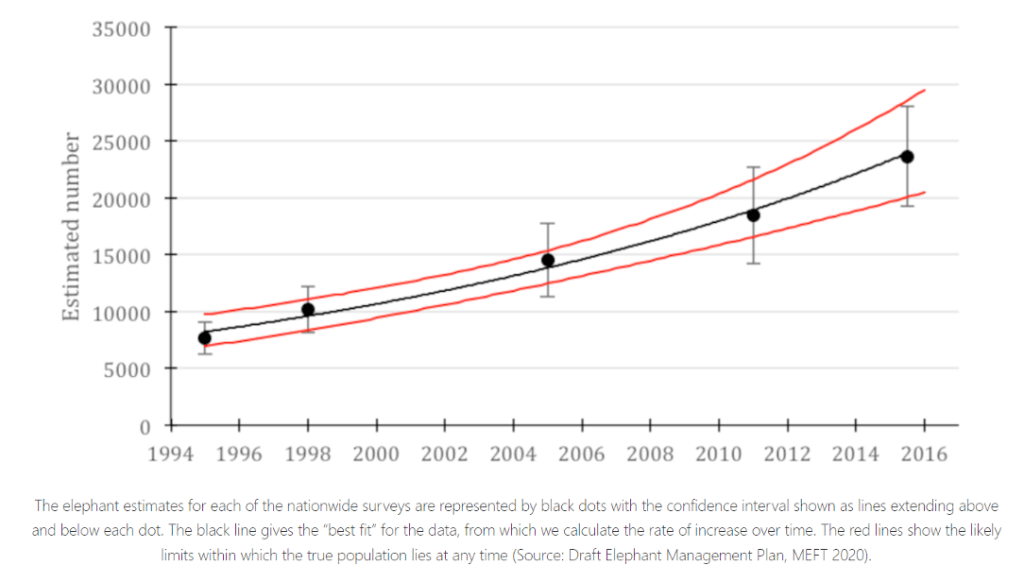
Recent media coverage has focused on Namibia’s drought and the associated wildlife management measures, leading to concerns about the impact on the country’s conservation efforts. Sustainable conservation strategies aim to protect entire ecosystems – natural systems that far surpass anything created by humans in age and complexity. Managing these systems is a daunting task that requires a holistic approach, focusing on maintaining the integrity of the entire ecosystem rather than preserving individual species in isolation. Artificial interventions, like increasing water availability and habitat fragmentation, have led to certain species, reaching unnaturally high population levels. Elephants, as keystone species and ecosystem engineers, can pose risks to other species and the overall balance of the ecosystem when their numbers become unsustainable. In this context, removing 83 elephants from an estimated population of 24,000 (according to the latest data from the Ministry of Environment, Forestry, and Tourism) will not negatively affect a population that has steadily grown over the last 50 years.
Africa remains the only continent where large mammals like elephants persist in healthy numbers, while they were lost from other parts of the world long ago. Effective conservation requires managing these species on a vast spatial scale, ensuring that their survival provides real benefits to local communities, such as income from tourism and sustainable resource use. Similar practices, like large-scale management of deer and wild boar populations in Europe, are common around the world, but they are particularly critical in Africa due to the vast areas required to support such large species and the lack of alternative economic opportunities. We call on the global community to recognize and support Namibia’s conservation achievements and not to undermine necessary management decisions that are essential to ensuring the long-term stability and survival of our ecosystems.
As custodians of Onguma Nature Reserve, we remain committed to ensuring the long-term sustainability of our reserve, particularly in the face of Namibia’s ongoing drought. Fortunately, due to proactive, foresightful management and close ecological monitoring, Onguma is in good shape compared to other areas in Namibia. At present, we do not need to resort to drastic measures such as off-takes or supplementary feeding. Key to our resilience have been the strategic decisions made in the past, including animal translocations, and the careful monitoring of the effect of the placement and management of waterpoints, which have created spatial refugia for resilience, allowing wildlife to thrive even under the current environmental pressures. We continue to monitor the situation closely to ensure that our natural resources remain well-managed and our wildlife populations healthy. However, we fully support Namibia’s broader conservation efforts, which are designed to ensure the sustainable use of natural resources for the benefit of both wildlife and local communities.
We are proud to be part of a country that leads by example in conservation, and we are confident that our continued efforts will allow Onguma to remain a haven for wildlife while contributing to the larger conservation success story of Namibia. Guests can continue to enjoy the diversity and beauty of Onguma, knowing that our practices are rooted in sustainable resource management and a deep respect for nature.
All the Best, The Onguma Team
Understand more about Elephants In Namibia
Best available information:
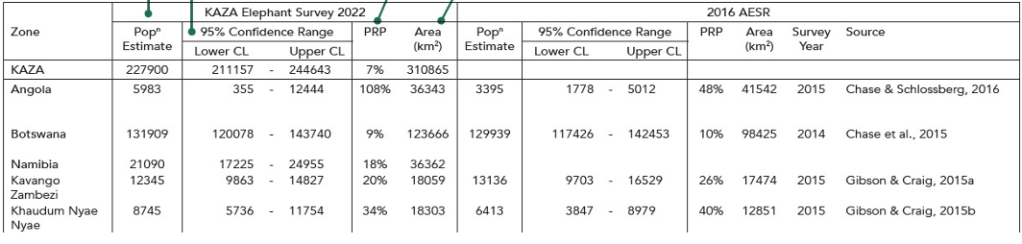
- KAZA Regional Count 2022: https://www.kavangozambezi.org/kaza-elephant-survey/
- An Overview of Elephant Conservation and Management in Namibia: http://the-eis.com/elibrary/sites/default/files/downloads/literature/An%20overview%20of%20elephant%20conservation%20and%20management%20in%20Namibia.pdf (elephant management plan Namibia 2021-2030)
- National Elephant Conservation and Management Plan 2021-2030: https://www.namibia-forum.ch/media/kunena/attachments/102/NationalelephantconservationandmanagementplanPartB_10_noBLEED.pdf
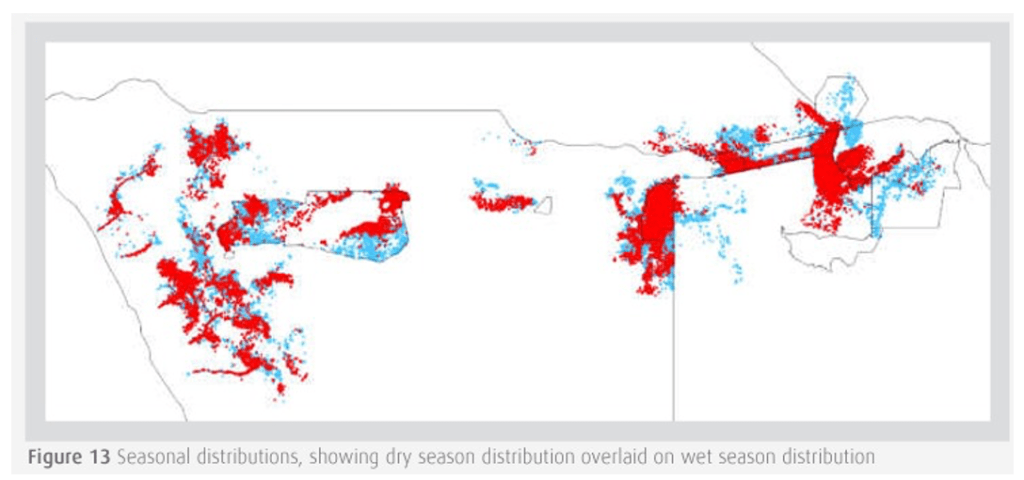
Distribution (Dry (red) and wet (blue) season)
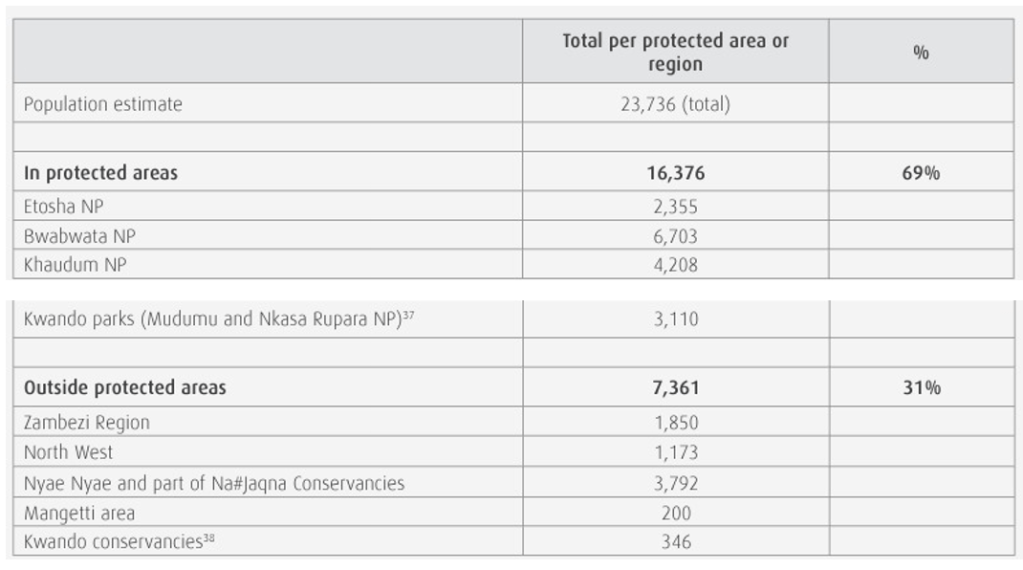
Namibian population: 23’736 elephants
Namibian Population Over Time: Etosha National Park: • 1954: 26 Elephants • 1967: 500 Elephants • Around 1990: Suspension of culling • 2024: approximately 2400

KAZA 2022 survey